

31 Dec 2026

Varonis is pulling the plug on on-prem. ProLion isn’t.

Learn how to keep your data →
Ransomware protection
Industries
Healthcare

Block the account. Not the business.

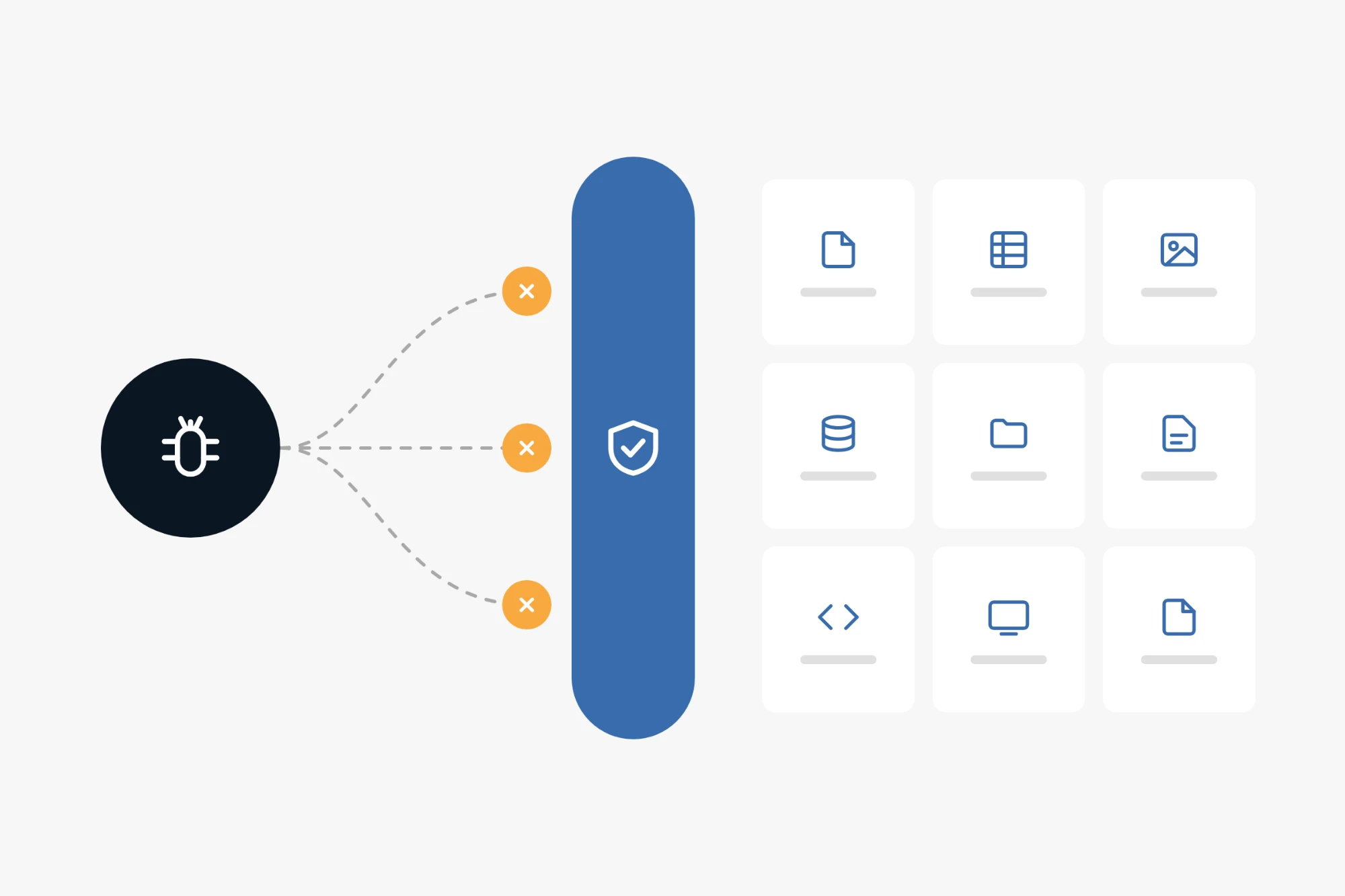
Taking a share offline stops everyone. We block the one account that is encrypting — in seconds, on the file system’s own event stream, with the list of files it touched already written.

Splunk
Microsoft Sentinel
Elastic
IBM QRadar

Syslog CEF and REST, into the tool you already run

The ransom is the small part of the bill.

What costs the money is the weeks afterward — and the copy of your data the group took before anything was encrypted, which no backup undoes.

~24 days
average downtime after an attack.
70 %
of attacks exfiltrate data before encrypting it.
$5.08M
average total incident cost, of which the ransom is a fraction.

Industry figures, not ProLion measurements, and vendor-compiled: downtime and cost from Statista and IBM via industry round-ups; the double-extortion share from 2026 threat reporting.

Three things have to happen, in this order.

Notice it on the file layer
6,000+ known extensions and patterns, plus a behavior baseline per account. A new strain has no signature; it still has a shape.
Cut off one account
Blocked automatically within seconds — or after a delay you configure, where an instant block would cost more than it saves.
Restore what it touched
Single-file restore out of existing snapshots, scoped to that account. Not a rollback of everyone else’s morning.
Know what left
The audit trail says which files were read before they were encrypted — the part that decides whether you have a notification to make.
Tell the people who act
Syslog CEF and REST into the SIEM, an incident in ServiceNow, a message in Teams.
Four-eyes principle
Protection actions can require two sets of credentials, so no one acts alone at three in the morning.

Let’s solve your data challenges.

Connect with our engineers to find the right approach for your infrastructure.

Four seconds against a weekend.

The same encryption run on the same share, with and without something watching the file layer.

Without

Nothing notices until somebody cannot open a file.

  1. 02:14An account starts encrypting a share.
  2. 02:14–07:00The run works through the volume. Backups replicate the encrypted files on schedule.
  3. 07:20The first user calls the help desk. The share is taken offline for everyone.
  4. Days 1–24Restore, rebuild, and the question nobody can answer: what did they take before encrypting?

Outcome

Weeks of downtime, a full-volume restore, and a notification written from assumptions.

With ProLion

The account is out before the second share is touched.

  1. 02:14The pattern is caught on the file system’s own event stream.
  2. +4 secThat one account is blocked. Every other session keeps working.
  3. 02:20The SIEM event and the ITSM incident carry the file list and the action taken.
  4. MorningThose files are restored from the last clean snapshot.

Outcome

One account blocked, no share offline, and a notification you can write from the record.

A scenario, not a case study — built from the way these incidents actually run.

Why the rest of the stack misses it.

Endpoint
An attacker with valid credentials looks like a user
EDR sees a signed-in session doing file operations
Firewall
The traffic is internal and expected
Nothing crosses a perimeter that was not meant to
Backup
It is a target itself, and it replicates the damage
A clean copy helps afterward; it prevents nothing
Storage console
It shows how full a volume is, not why
Capacity is not behavior

Talk to an engineer who knows your data.

Four fields, and somebody who knows ONTAP, PowerScale and what FPolicy does. Not a qualification call.

Four fields. No hidden newsletter.

Thank you! Your submission has been received!
Oops! Something went wrong while submitting the form.