




An effective ransomware strategy includes prevention and detection, stopping the ransomware, and recovery.
Many organizations (and tools) make a critical mistake. They focus on ransomware detection and recovery, but skim over how to actually prevent and block ransomware.
It’s a bit like the South Park episode where the gnomes have a clever plan to steal underwear: Phase one: collect underwear; phase three: profit. What’s phase two? No one knew.
This article explores the importance of a comprehensive ransomware strategy and how to effectively implement all three phases.
Key Components of an Effective Ransomware Strategy
An effective ransomware strategy protects organizations from cyberattacks. With dedicated tactics for each key phase, you can significantly reduce the risk of falling victim to ransomware and minimize the impact if an attack does occur.
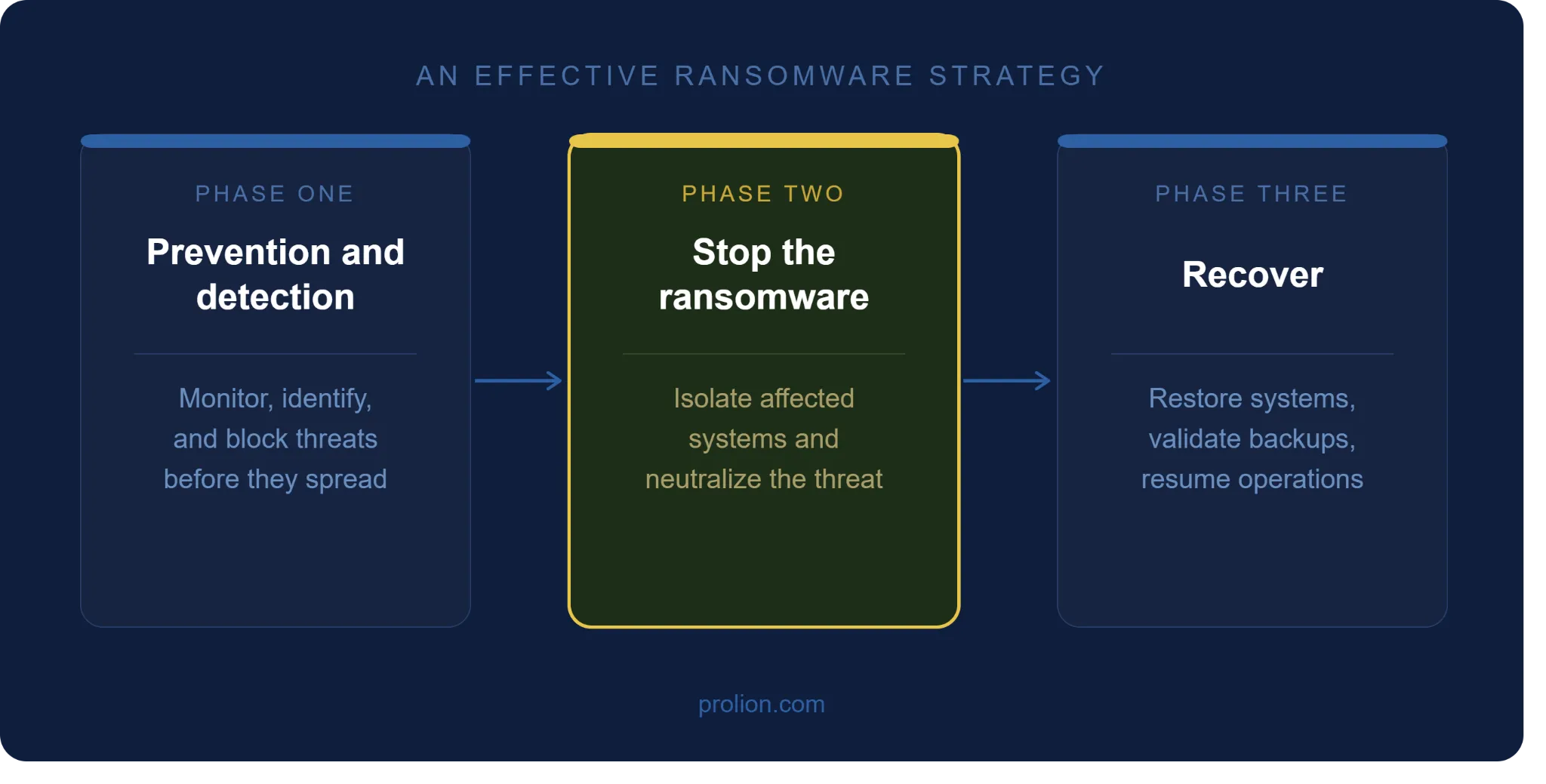
Phase 1: Prevention and Detection
The first line of defense against ransomware is a solid prevention and detection strategy. This phase involves implementing advanced tools and practices for monitoring and detecting ransomware activities before they cause significant damage.
Ransomware detection typically employs three main methods: signature-based, behavior-based, and deception-based detection. Each approach offers unique advantages in identifying potential threats.
Tip: Read our full guide to ransomware detection to learn more.
Phase 2: Stop the Ransomware
A solid ransomware strategy doesn’t just consider how to prevent ransomware, but how quickly you can contain it.
Even the most robust prevention layer operates on the assumption that something will eventually slip through. Sophisticated ransomware attacks are designed to evade detection, and a strategy that only accounts for keeping threats out will leave organizations unprepared when one succeeds.
This rapid response is key to preventing the spread of the malware and minimizing potential damage. To this end, you can:
- Leverage automated ransomware defense tools like ProLion DataDefense
- Activate your ransomware response plan
- Disconnect infected systems from the network
- Disable network shares and wireless access points
- Reset all user and admin account passwords
- Implement network segmentation to contain the spread
- Take steps to protect your backup systems and ensure they’re isolated from the network
- Consider involving law enforcement or specialized cybersecurity firms for assistance
Tip: Read our full guide to ransomware containment to learn more.
Phase 3: Recover from Ransomware
The recovery phase involves restoring affected systems and data, ensuring business continuity, and implementing measures to prevent future attacks. This process can be time-consuming and complex, often requiring you to restore entire systems.
How DataDefense Supports Your Ransomware Strategy
DataDefense from ProLion supports your ransomware strategy across all three phases.
First, it uses advanced detection methods to identify ransomware in real-time. As soon as it detects ransomware activity, it blocks the suspicious user from the network, isolating the threat. It also immediately notifies the IT team. This rapid response is key to preventing the spread of the ransomware and minimizing potential damage.
Finally, it provides a precise record of affected files, so you can quickly recover the files you need in just a few clicks.
Getting Executive Buy-In for Your Ransomware Strategy
One of the most consistent challenges security teams face is making the case for ransomware investment before an incident occurs. Leading with threat statistics is a natural instinct, but it rarely moves the needle with leadership.
“You have to make the abstract tangible,” says AJ Thompson, CCO at Northdoor plc and a member of IBM’s Worldwide Security Advisory Council. “Leaders respond to financial exposure and peer precedent, so we frame ransomware preparedness in terms they engage with: what would three weeks of operational downtime cost this business? What did the equivalent incident cost a comparable organization last year?”
AJ also points to cyber insurance conversations as an effective lever. “Insurers are increasingly requiring demonstrable controls, and that creates a commercial imperative that cuts through where risk arguments sometimes don’t. The goal is to move ransomware from an IT problem to a business continuity problem, because that’s what it actually is.”
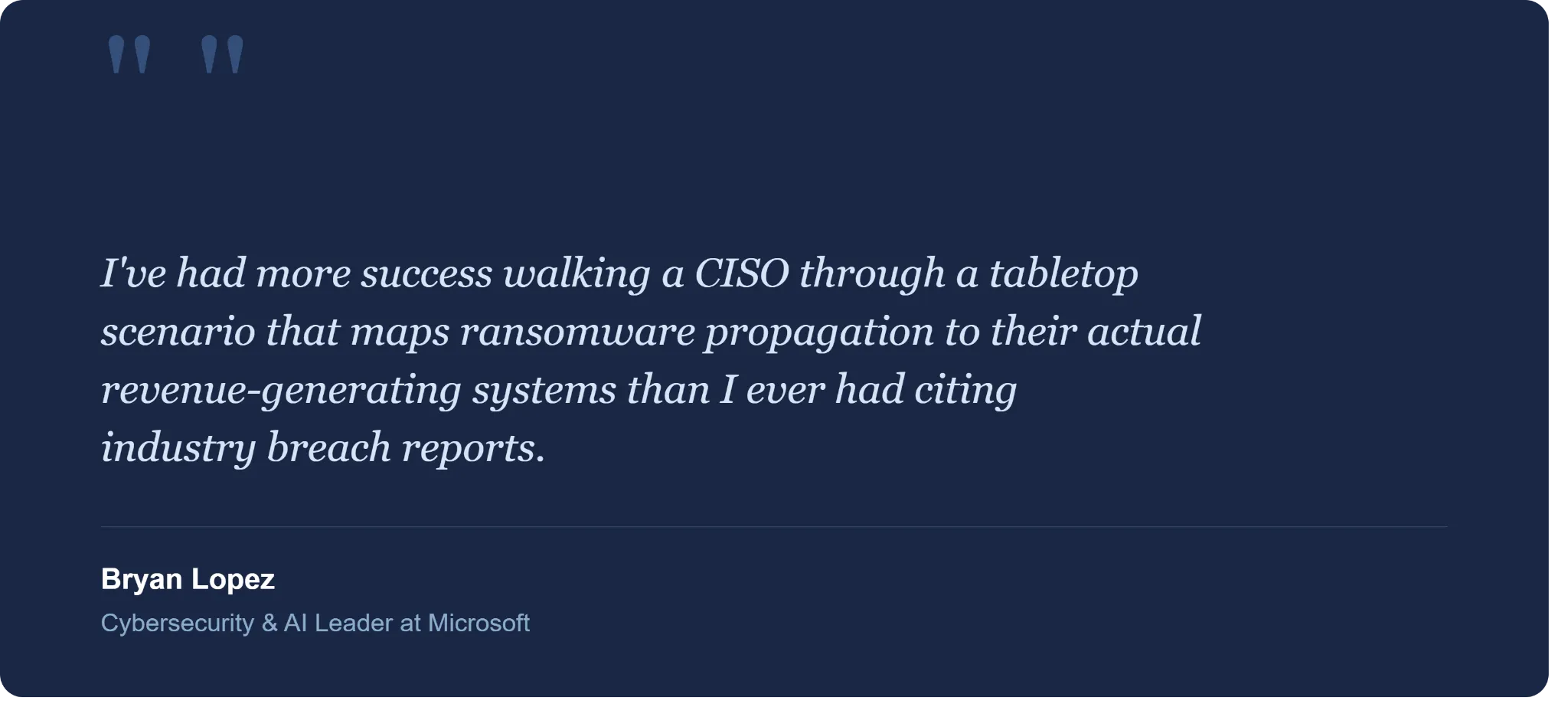
Bryan Lopez, Senior Director of AI & Cloud Strategy at Microsoft, advocates a similar approach: leading with operational continuity rather than fear. “Executives respond to downtime projections and recovery cost models. I’ve had more success walking a CISO through a tabletop scenario that maps ransomware propagation to their actual revenue-generating systems than I ever had citing industry breach reports.”
The question that consistently lands: “If this building caught fire and your data center went with it, how long until you’re back to full operations?”
Common Mistakes and Misconceptions in Ransomware Strategy
Even organizations that have invested seriously in ransomware defenses can carry significant blind spots. Here are the patterns experienced practitioners encounter most often.
Treating a security tool as a complete strategy
Purchasing a leading endpoint detection and response solution can create a false sense of security. As Juan Mathews Rebello Santos, cybersecurity researcher and founder of BNVD.org, explains: “Modern ransomware groups actively seek ways to disable, bypass, or evade endpoint defenses. No single technology can provide sufficient protection against modern ransomware operations.”
A robust strategy layers controls across endpoints, identity, network, storage, and recovery, so that no single failure point becomes a catastrophic one.
Assuming Backups Are Recoverable Without Testing Them
AJ Thompson flags backup integrity as one of the most consistent gaps he finds during security assessments. “Organizations assume their backups are clean and recoverable, but they’ve never tested that at scale, and critically, those backups are often reachable from the same environment an attacker has already compromised.”
Deprioritizing Recovery Rehearsal
There is broad consensus among practitioners that recovery rehearsal is the most consistently underfunded element of ransomware strategy. Organizations invest in prevention and detection but rarely validate whether they can restore critical systems under pressure.
“Rehearsing recovery is unglamorous work as it’s disruptive and resource-intensive, which is exactly why it gets deprioritized,” says AJ Thompson. “We see organizations discover for the first time during a live incident that their recovery process takes four times longer than estimated, that certain backup sets are corrupt, or that runbooks haven’t been updated since a major infrastructure change.”
Underprotecting The Storage Layer
Security teams tend to focus on endpoints and network perimeters while overlooking storage infrastructure, and sophisticated attackers have learned to exploit that gap. Targeting backups directly eliminates the victim’s primary recovery option, which is precisely why it has become a standard move in advanced ransomware campaigns.
“Protecting the storage layer is critically important, and chronically underweighted,” says Bryan. “Most ransomware strategies concentrate on the endpoint and the network perimeter, but sophisticated actors have learned to target backup repositories and storage infrastructure directly because that’s what eliminates your negotiating position.”
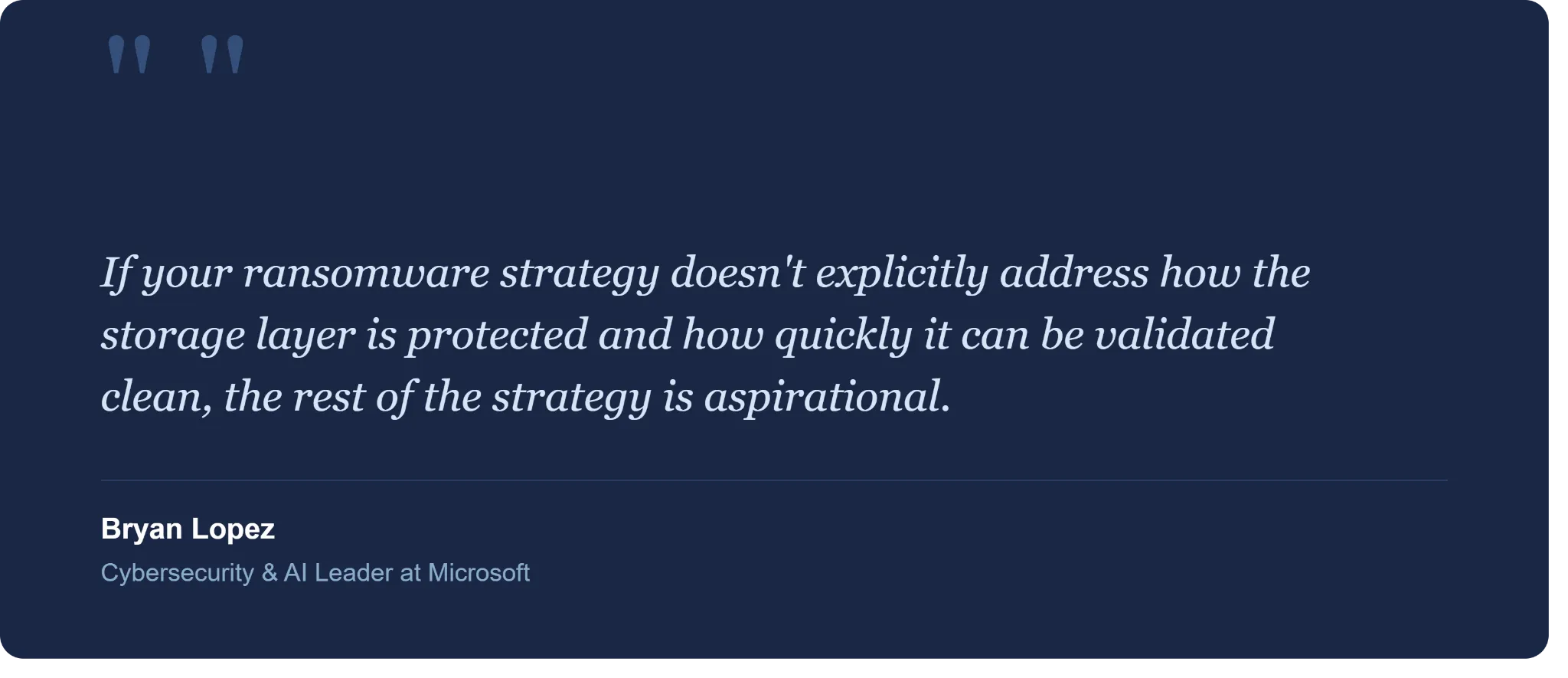
According to Bryan, if your ransomware strategy doesn’t explicitly address how the storage layer is protected and how quickly it can be validated clean, the rest of the strategy is aspirational.
Enhance Your Ransomware Strategy with DataDefense
A comprehensive ransomware strategy is key to protecting your organization. If you have all the phases covered, ransomware attacks become a minor annoyance rather than a career-ending event.
ProLion’s DataDefense monitors your network 24/7 and takes immediate action to prevent and block ransomware attacks. Want to see how it works? Watch the demo and see how proactive ransomware protection can safeguard your organization’s data.
Prefer to keep reading? Check out our free guide to ransomware protection for security professionals.


