



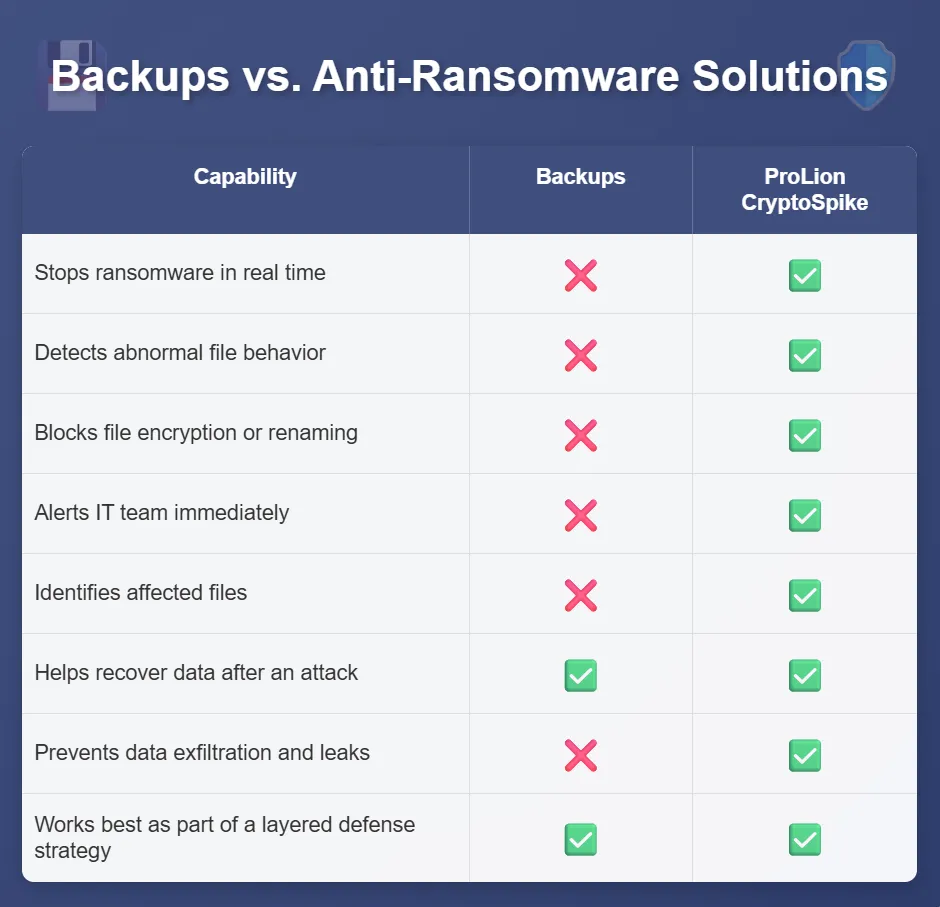
First, let’s be clear: backups and anti-ransomware solutions are not interchangeable. They serve different but equally critical purposes. A backup is your safety net. It helps you recover after a cyberattack. But if you rely on backups alone, you’re already in damage-control mode. By the time you’re restoring data, the attack has already succeeded.
In this article, you’ll learn the key differences between backups and anti-ransomware solutions, and why you actually need both.
The Role of Anti-Ransomware Solutions
Anti-ransomware solutions are designed to detect and stop threats before damage is done. Rather than simply helping you recover after an attack, they proactively monitor file activity in real time, spotting suspicious behavior such as mass encryption, file tampering, or unusual access patterns.
The best solutions don’t just detect ransomware, they contain it. ProLion DataDefense combines signature detection with behavioral analysis to identify and block threats as they unfold, stopping the attack before it spreads. It blocks suspicious users, alerts your IT team in seconds, and lets you restore only the affected files so the organization can quickly get back to business.
Tip: Unlike many other anti-ransomware tools, ProLion DataDefense also offers ransomware recovery. You can restore the files you need in one click. This is useful if an attack does manage to get through (such as via an insider threat) and is much faster than restoring the entire system.
What Backups Can and Can’t Do
Backups are essential, but they should be your last resort, not your primary defense.
Backup solutions help you roll back to an earlier point in time, assuming your backups are intact. But they don’t alert you to suspicious behavior. They don’t tell you when the attack started, which files were affected, or who triggered the breach. And they certainly don’t stop ransomware as it spreads.
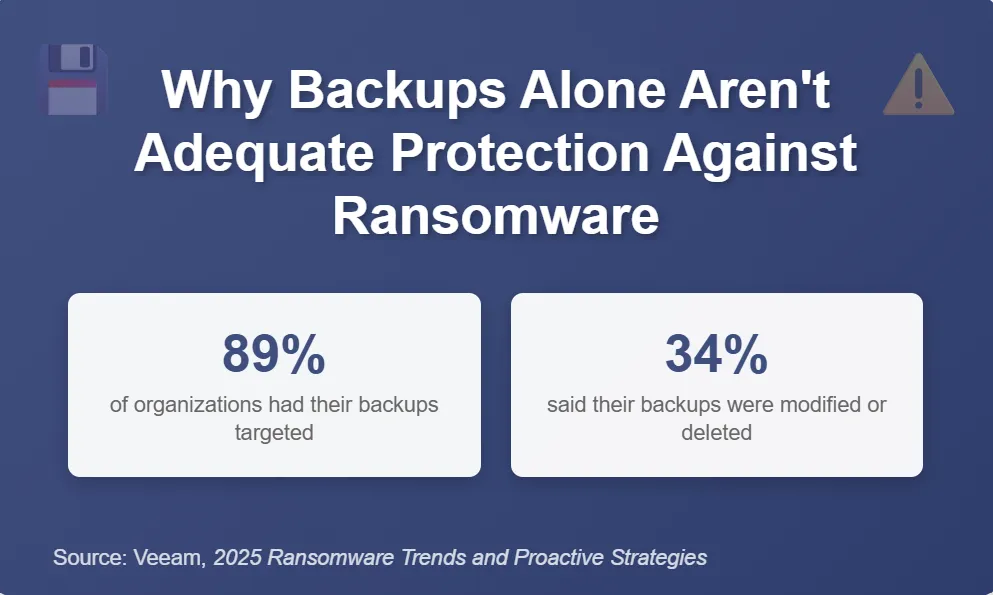
Worse, ransomware groups now actively target backup environments to sabotage recovery efforts. According to a recent study, 89% of organizations said ransomware attacks targeted their backups, and in 34% of cases, the backups were compromised.
Why You Need Backups and Ransomware Protection
Backups are essential for restoring data if something slips through. But they won’t stop an attack in progress, and they won’t prevent hackers from stealing or leaking your data.
That’s why proactive ransomware prevention is key. If you can stop an attack in real time, you protect your data, avoid downtime, and won’t need to pay the ransom.
Not Sure If a Solution Is Truly Anti-Ransomware? Ask These Questions
Many vendors blur the lines between backup and ransomware protection. If you’re evaluating a tool, use these questions to clarify what it really does:
- How does your anti-ransomware solution stop ransomware attacks?
- Does your anti-ransomware solution tell you where the attack originated from?
- How does your anti-ransomware solution monitor for ransomware attacks?
- What actions does it take once it detects ransomware?
- Does your anti-ransomware solution give you a full lossless recording of all files affected in the attack?
- Does your anti-ransomware solution integrate with a backup solution?
- Does your anti-ransomware solution allow you to restore only the files that were affected in the attack, or do you have to restore the entire backup?
- Does your anti-ransomware solution act as a layer in defense in depth?
- Does your anti-ransomware solution work well with other security measures?
ProLion DataDefense answers “yes” to every one of these because it was built specifically to stop ransomware, not just clean up afterward.
See Ransomware Protection in Action
Ready to strengthen your ransomware defenses? Check out an on-demand demo of ProLion DataDefense and see how real-time protection at the storage layer can stop attacks before they spread.


